How to Choose the Perfect Location for Your Outdoor Hot Tub (Complete Guide)
Optimize your space for safety, comfort, and long-term durability—before you buy or install.
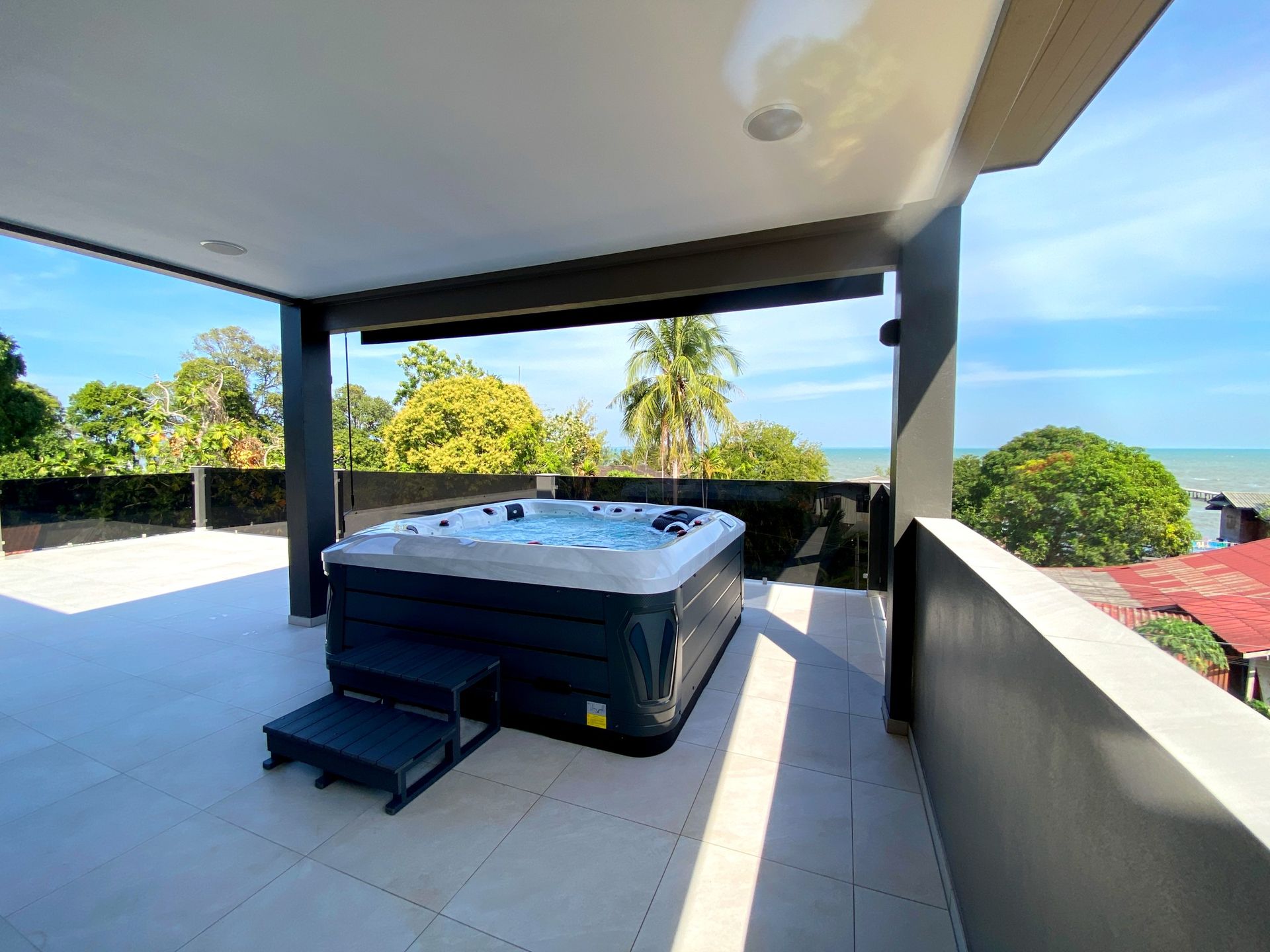
Why the Location Matters
An outdoor hot tub is designed to deliver clean, warm hydrotherapy with powerful massage jets. But the enjoyment (and the lifespan of the hot tub and your property) depends on picking a safe, well-prepared spot—whether you place it fully outdoors, semi-outdoor under a roof/gazebo, or indoors/inside the building envelope.
This guide walks you through:
- Structural load capacity and slab requirements
- Access and delivery planning (including rooftops and high floors)
- Why your base must be perfectly level (not sloped)
- Safety around the tub (non-slip, clear paths, electrical separation)
- Ventilation for indoor or enclosed spaces
- Plumbing options for filling and draining
- Service clearances for future maintenance
- Placement tips for comfort, views, and privacy
1) Check Structural Load Capacity (the non-negotiable)
Once you’ve chosen a model, verify the bearing capacity of the area that will support it—including the weight of the tub, the water, and people using it. Water is the largest contributor.
Example: MARINA series (reference specs)
- Size: 220 × 220 × 90 cm
- Empty shell weight: 430 kg
- Water volume: 1,080 liters (~1,080 kg)
- Total with water (no bathers): 1,510 kg
Area:
2.20 m × 2.20 m
= 4.84 m²
Load with water only:
1,510 kg ÷ 4.84 m² ≈ 312 kg/m²
Add 4 bathers @ 80 kg each:
+320 kg → 1,830 kg total →
≈ 378 kg/m²
What to do next: Give your contractor or structural engineer the exact model specs (empty weight, water capacity, footprint) and your expected number of users. They will confirm the slab or structure can safely support the load.
Important: If you cannot verify the bearing capacity of rooftops or upper floors,
do not install there. Choose a new location to prevent structural damage, building settlement, or costly repairs later.
2) Plan Delivery & Access (cranes, clearances, temporary removals)
Before ordering, arrange a site visit to assess:
- Pathways, gates, stairs and elevator dimensions
- Whether temporary removals (e.g., railings, doors) are needed
- If special lifting equipment (crane, boom, forklift) is required
- Any extra costs (you’ll want the estimates upfront)
A professional pre-purchase check prevents surprises and lets you plan schedules, budgets, and safe handling—especially for rooftops, high-rise balconies, and tight urban sites.

3) Build a Perfectly Level Base (do not slope the pad)
Your hot tub must sit on a flat, uniform, level surface—no tilts, humps, dips, voids, or soft spots. Do not intentionally slope the pad for drainage. Hot tubs are engineered to distribute weight evenly; a sloped base concentrates loads on the lower side and can damage the shell and frame over time.
Recommended base types (choose one, sized to the full footprint):
- Reinforced concrete slab (typical choice)
- Engineered pavers on compacted base
- Structural deck specifically designed for the tub’s load
Keep the surface clean—remove debris, pebbles, wood chips, and dust before installation.
4) Safety First: Non-Slip Surfaces & Clear Paths
Wet feet happen. To protect children, older adults, and everyone in between:
- Use non-slip finishes around the hot tub and along routes to/from bathrooms
- Keep walkways level, clear, and well-lit
- Maintain dry storage for steps and covers when open
- Electrical safety: keep TVs, speakers, and other appliances ≥ 1.5 m from the waterline; use properly protected circuits as per local code (e.g., GFCI/RCD)

5) Ventilation for Indoor or Enclosed Installations
If you’re placing the hot tub indoors (wellness room, gym, sauna suite) or semi-outdoor in an enclosed space, ventilation is critical for both comfort and building health:
- Install exhaust fans and plan cross-ventilation via windows/vents
- Manage heat and humidity to prevent stale air, condensation, odors
- Ventilation prevents mold on surrounding finishes and keeps breathing easy during hot soaks
Privacy is important, but do not create an airtight room. Prioritize ventilation first; add privacy screens or curtains that allow airflow.

6) Water Supply & Drainage: Two Practical Approaches
You can install fixed plumbing (inlet and drain lines) or keep it simple with portable methods:
A. Fixed/hidden plumbing
- Traditional supply and drain lines concealed under or adjacent to the hot tub.
- Best when you’re pouring a new slab or building a new deck, so pipes can be embedded and hidden.
* If you want this installation (A) :
Contact Q&G before you pour the slab or frame the deck and request the model-specific rough-in plan (plumbing + electrical). Each hot tub model has different connection locations, so rough-in positions must match your exact unit.
B. Simple fill & drain (no permanent lines)
- Fill via garden hose
- Drain via submersible pump to a suitable outlet
- Popular for outdoor hot tubs worldwide; keeps the deck uncluttered
Indoor or high-floor installs: Always include reliable floor drainage (channel drains or standard waste lines) to protect adjacent rooms in case of overfill or future leaks.
7) Water Care & Change Frequency
A hot tub behaves like a
small swimming pool with filtration and chemical sanitation. For
private residential use, you can typically keep the same water for
1–3 months
(depending on usage and maintenance).
For commercial or frequent use, plan
more frequent
water changes.

8) Service Access & Future Maintenance
Where the equipment lives:
All primary hot tub equipment is installed
under the tub—including the
circuit/control board, heater, water pumps, unions, and piping. Technicians must be able to reach these parts from below and around the perimeter.
Freestanding installs
- Best practice clearance: Leave at least 60 cm (24 in) of open space around all sides of the hot tub for service access and ventilation.
- Tight sites: If you must place one or two sides near a wall or fence, design the layout so the tub can be slid or pulled forward when service is required (protect the surface with skates/mats). Avoid hard-fixing the tub to any surrounding structure.
In-deck or partially sunken designs (walkways, platforms, perimeter decking)
- Continuous access void: Provide a minimum 60 cm clear void around the equipment area beneath the deck so technicians can reach pumps, heater, unions, and drains.
- Removable panels: Install removable deck panels or access doors directly above equipment zones. Openings should be large enough to extract a pump or heater without demolition.
- Don’t block service paths: Avoid poured concrete, built-in benches, or planters that would permanently obstruct access to the equipment area.
Real-world service needs
Some maintenance and repairs require working while lying down or approaching components from low angles to reach fasteners and unions. Keep the service zone:
- Dry, clean, and level (no debris that can puncture hoses or injure technicians)
- Well-lit, with an electrical disconnect and water shutoffs reachable without removing the tub
- Free of stored items under steps or around panels on the equipment side

9) Comfort, Views & Everyday Convenience
Maximize how you’ll actually use the hot tub:
- Proximity to a bathroom: Shorter, safer wet-foot routes reduce slip risk
- Outdoor shower nearby: Rinse before/after soaking; it’s also a fun spa touch
- Orientation to views: If your model has loungers facing one way (e.g., Oceanfront Alfa has two loungers facing the same direction), rotate the hot tub so those loungers capture your favorite view—pool, mountains, sea, or garden
Fully outdoor installs: Choose a model rated for outdoor use (warranty-compliant). Keep the cover on whenever the tub isn’t in use—it protects the touchscreen, valves, pillows, and shell from UV/rain, preserves water quality, and saves energy. Leaving it uncovered = faster wear and more maintenance (risk of green/cloudy water). In full sun, a typical cover lifespan is ~3 years;

10) Semi-Outdoor: Privacy Without Sacrificing Airflow
Under a gazebo or roof overhang, add:
- Breeze-permeable privacy screens or openable curtains
- Maintain ≥ 1.5 m clearance to any electrical equipment
- Keep the area well ventilated to manage humidity and odors
Quick Specifications Checklist (copy/paste for your contractor)
- Hot tub model and footprint (L × W × H)
- Empty weight and water capacity (liters)
- Total load with water + expected occupants
- Base type and thickness/reinforcement
- Perfectly level surface (no slope)
- Access plan (path widths, steps, crane if needed)
- Drainage strategy (channel drain or pump-out)
- Ventilation (for indoor/semi-outdoor setups)
- Electrical (protected circuit, safe clearances)
- Service access (removable panels/voids)
- Cover handling (space to remove/store)
Frequently Asked Questions
Should my hot tub base be sloped for drainage?
No. Keep the pad perfectly level. Use perimeter drains or a pump for water management. A sloped base can overload one side and damage the tub.
Can I put a hot tub on my rooftop?
Only if a qualified structural professional confirms the deck’s load rating for the filled tub + users. If capacity is unknown or insufficient, choose another location.
How often should I change the water?
For private homes: typically every 1–3 months with proper sanitation and filtration. For commercial/frequent use: change more often.
Do I need fixed plumbing lines?
Not necessarily. Many outdoor owners fill with a hose and drain with a submersible pump. Fixed lines are great if you’re building new and can conceal them.
What about ventilation if I put it indoors?
Plan exhaust fans + air inlets. Good airflow keeps breathing comfortable, reduces humidity, and prevents mold.
How close can TVs or speakers be?
Maintain at least 1.5 m from the waterline and follow local electrical codes (e.g., GFCI/RCD).
Pro Tip: Get a Pre-Purchase Site Check
A professional inspection helps you:
- Validate load capacity and base design
- Confirm delivery logistics and any temporary removals
- Identify special lifting needs and pricing
- Finalize plumbing, drainage, ventilation, and electrical plans
If you’re working with Q&G, ask their team to visit your site before you order so you’ll have a precise plan and cost breakdown.
Contact: 087-816-6383
Final Word
Choosing the right spot for your outdoor hot tub isn’t just about looks—it’s about structural safety, long-term reliability, and effortless everyday use. Confirm the load, build a level base, plan drainage and ventilation, and make sure delivery and service access are sorted. Get these right, and you’ll enjoy years of clean, relaxing hydrotherapy with peace of mind.
Explore outdoor hot tubs at
QandGTub.com